-
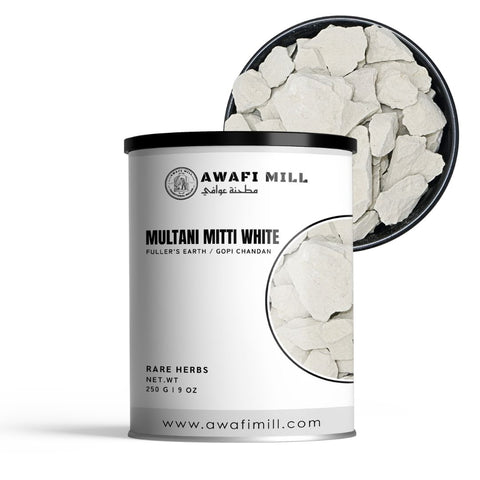
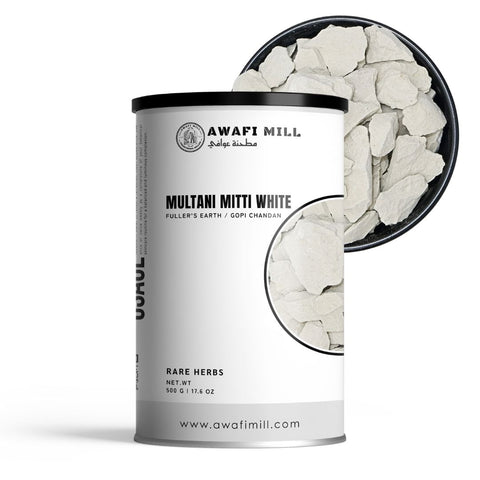
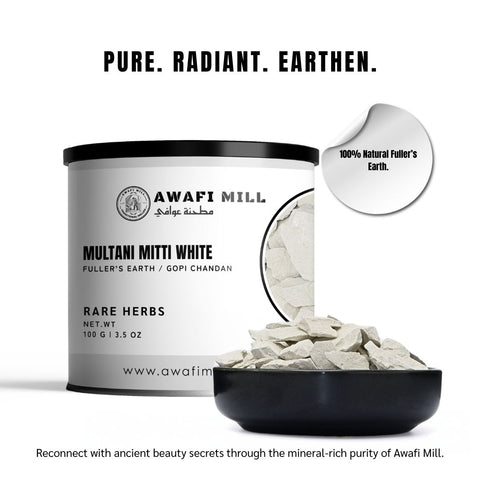
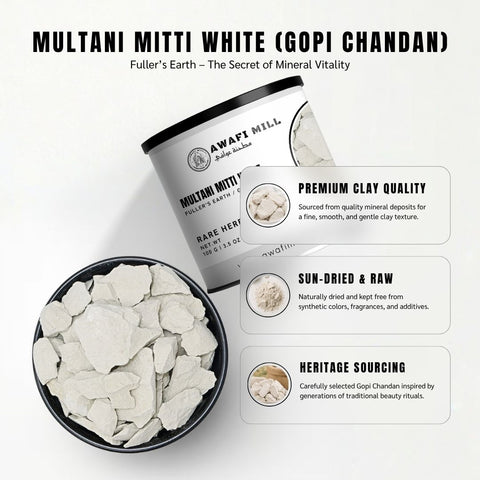
Also known as: Gopi Chandan, White Clay, Mud of Multan, Bentonite (Calcium-rich), Bleaching Clay.
-
Geological Origin: A naturally occurring sedimentary clay primarily composed of Hydrated Aluminum Silicates. It is formed from the slow decomposition of volcanic ash over millions of years, found in the mineral-rich arid regions of the Indian subcontinent.
-
The "Fuller" Heritage: The name "Fuller's Earth" comes from its historical use by "fullers"—textile workers who used the clay to "full" or scrub grease and lanolin out of raw wool. Its molecular structure acts like a microscopic magnet for oils and impurities.
-
Physical Characteristics: A fine, pale-cream to stark-white powder. When dry, it is soft and velvety; when moistened, it transforms into a cooling, highly plastic paste with a distinct "Petrichor" aroma—the scent of the first rain on dry earth.
-
Chemical Profile: Rich in Magnesium Chloride and Calcium, which contribute to its high ion-exchange capacity. Unlike other clays, it has a unique ability to decolorize and absorb without stripping the surface of its natural structural integrity.
-
Historical Context: From the ancient bathing rituals of the Mughal Queens to its use as Gopi Chandan in sacred tilaks, this clay has been the "Gold Standard" of natural cleansing for millennia. It was the original "Dry Shampoo" of the Silk Road.
-
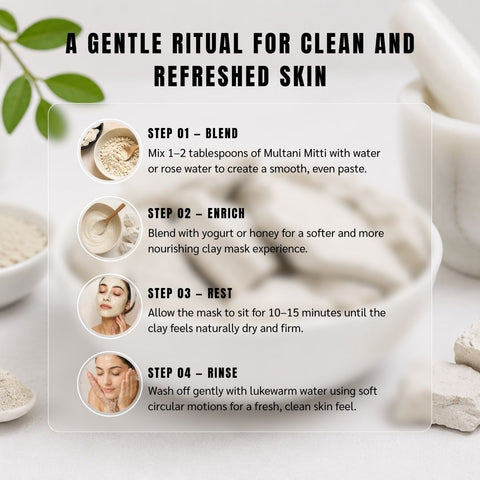
How to use: For a "Traditional Cooling Mask," mix the powder with rosewater or chilled milk to create a smooth, lump-free paste. For "Artisan Textile Cleaning," a dry dusting of the powder can be used to lift fresh oil spots from delicate fabrics like silk or pashmina.