-
Also known as: Lal Multani, Red Clay, Mitti-e-Surkh, Hematite Clay, Ochre Earth.
-
Geological Origin: A rare variant of sedimentary Fuller’s Earth, distinguished by its high concentration of Iron Oxides. Formed in deep mineral veins where ancient volcanic ash has reacted with oxygen-rich groundwater, this clay is primarily harvested from the iron-rich belts of the Indian subcontinent.
-
The "Thermal" Heritage: Unlike the white or yellow varieties, Red Multani Mitti is traditionally considered a "Warm Clay." The presence of iron not only gives it a striking rust-red hue but also changes its electrical charge, making it a more vigorous stimulant for surface circulation when applied to the skin.
-
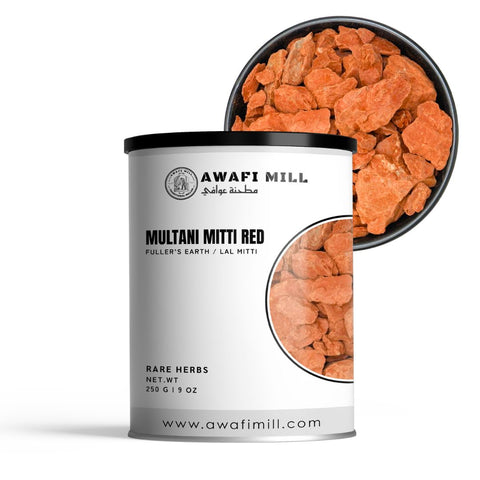
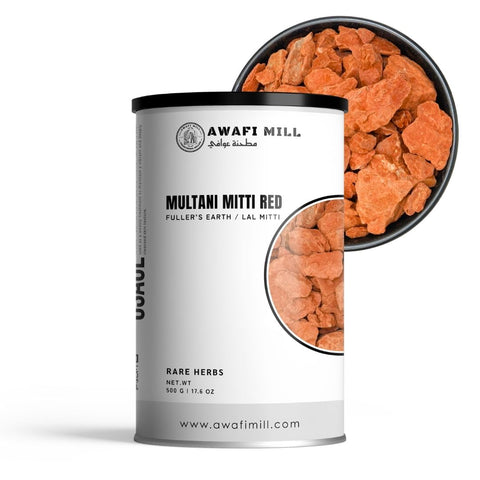
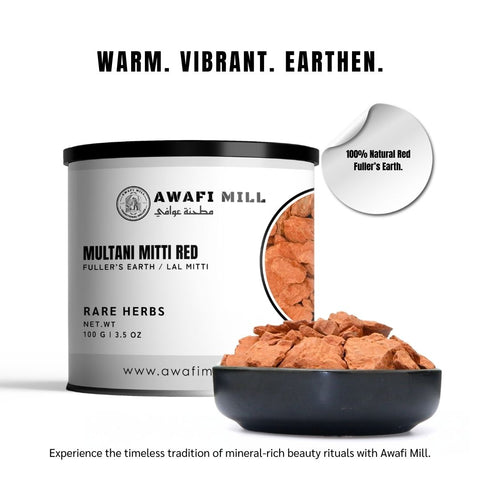
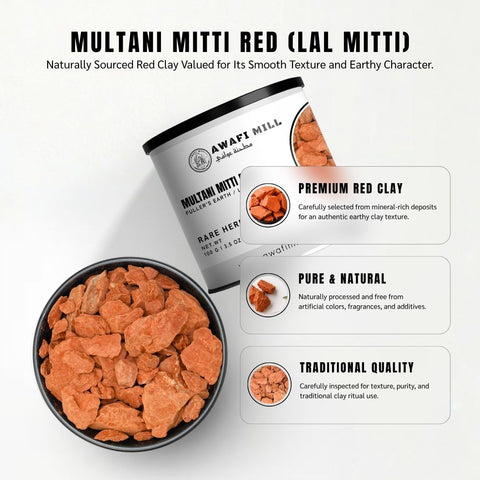
Physical Characteristics: A fine, terracotta-red powder. When dry, it feels slightly more granular than white clay; when hydrated, it creates a rich, earthy paste that holds heat remarkably well.
-
Chemical Profile: Exceptionally rich in Iron ($Fe_2O_3$), Magnesium, and Silica. It has a high "Cation Exchange Capacity," allowing it to swap mineral ions with the surface it touches, making it a favorite for "Mineralizing" treatments.
-
Historical Context: In the ancient Unani and Ayurvedic traditions, Lal Mitti was used by athletes and wrestlers in "Akhadas" (traditional gyms). They would coat their bodies in this red earth to invigorate the muscles and cool the core through evaporation after intense physical exertion.
-
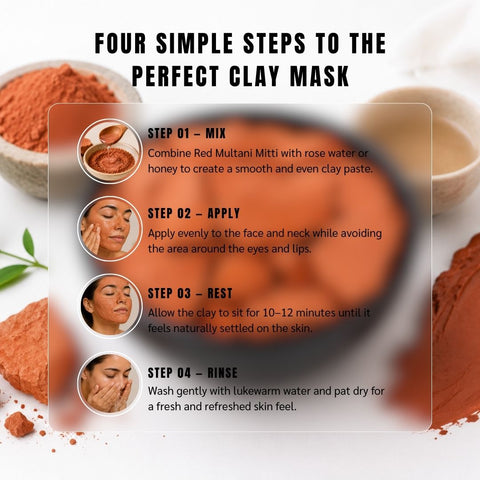
How to use: For an "Invigorating Body Wrap," mix with lukewarm water or a splash of vinegar to activate the minerals. In Traditional Pottery, it is used as a natural "Slip" to give earthenware a vibrant, polished red finish.