🎉 First order: 15% off AED 149+ — Use code WELCOME15🇦🇪 UAE free standard delivery on orders AED 99+💳 Pay in instalments with Tabby & Tamara🔒 Secure checkout — Cards, PayPal and more🌍 Worldwide delivery available
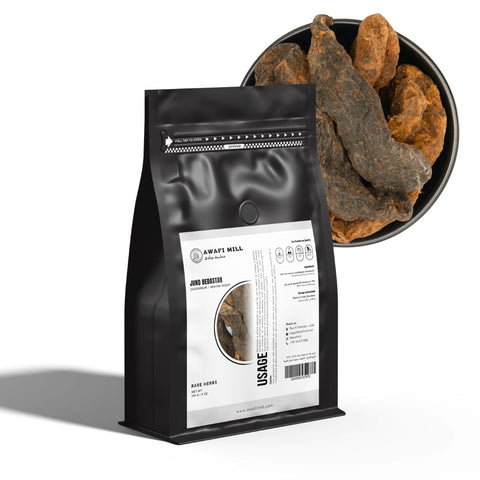
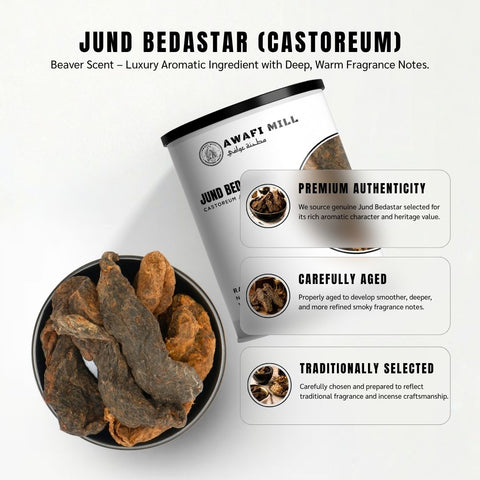
Also known as: Castoreum, Khusia al-Bahr, Bibergeil, Ash Sage Abi, Gindha, Musk of the Beaver.
Zoological Origin:Castor fiber (The dried scent glands, or "castor sacs," found in both male and female beavers).
The Botanical-Zoological Link: Castoreum is a unique "hybrid" botanical. Because beavers subsist almost exclusively on the bark of willow, birch, and aspen trees, their scent glands concentrate the phytochemicals of these trees (such as salicin). The resulting resin is a biological distillation of a high-tannin forest diet.
Sensory Profile: In its raw, dried state, the scent is intensely "animalic" and pungent. However, when diluted or aged, it transforms into a sophisticated, warm aroma of Russian Leather, smoky birch tar, and rich tobacco with a sweet, balsamic undertone.
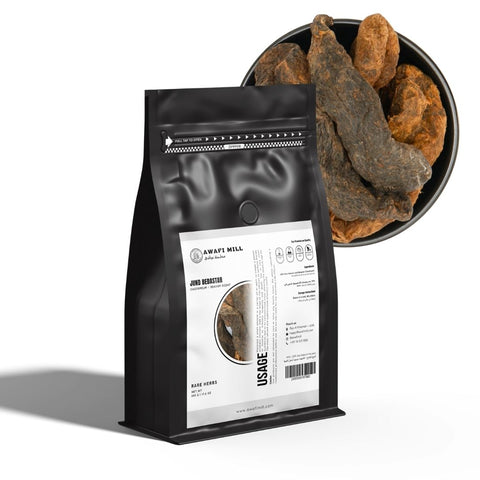
Physical Characteristics: Dark brown to nearly black, pear-shaped sacs that become hard and resinous when dried. The interior has a waxy, crumbly texture.
Historical Context: From the writings of Herodotus and Pliny the Elder to the medieval Unani texts, Jund Bedastar was a legendary commodity. It was so highly valued that it was often used as a standard of trade along the northern Silk Road, prized for its ability to "fix" other scents and its incredible longevity.
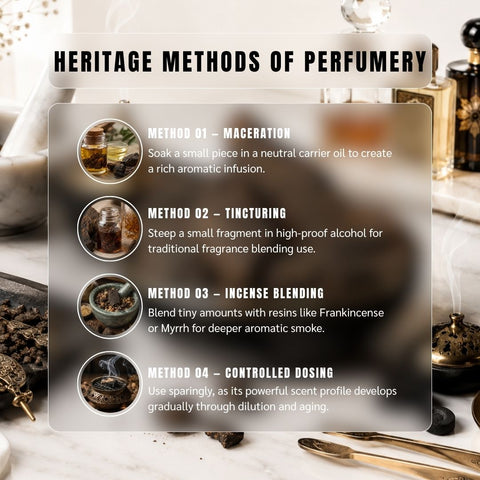
How to use: Traditionally, the dried sac is ground or sliced. In High-End Perfumery, it is used to create a "Leather Accord." In Traditional Crafts, it has been used as a scent marker and a component in specialized leather-conditioning balms to impart a rich, authentic aroma.