-
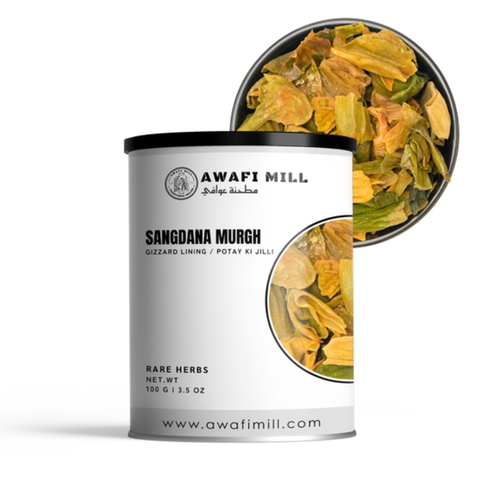
Also known as: Potay Ki Jilli, Qishr Jilda al-Qunsuwa, Ventriculus Callosus Galli, Chicken Gizzard Membrane.
-
Zoological Origin: Gallus gallus domesticus (The thin, yellow internal paries or "lining" of the avian gizzard).
-
The Biological Engine: The gizzard is a highly muscular organ used by birds to grind tough seeds and grains. The Sangdana Murgh is the specialized, protective yellow membrane that lines this organ. It is composed of a unique, tough protein-polysaccharide complex (koilin) designed to withstand extreme mechanical friction and acidic environments.
-
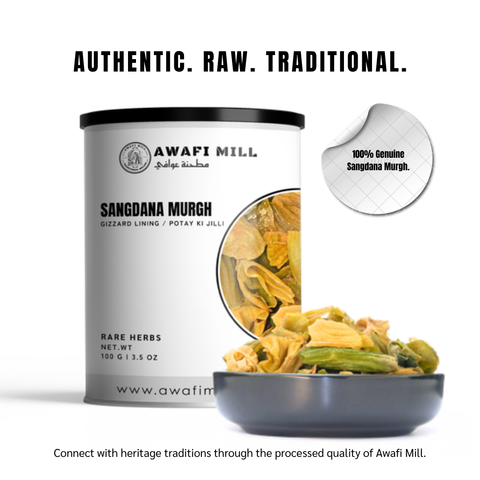
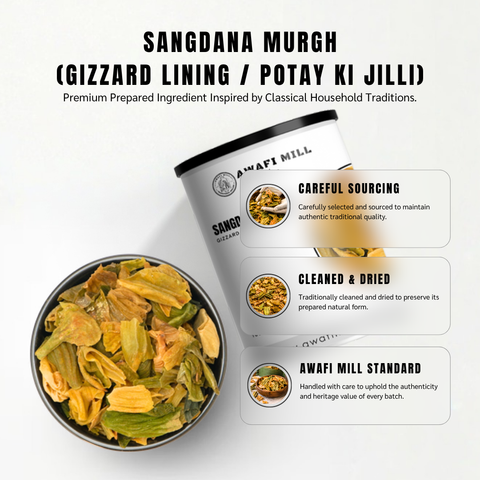
Physical Characteristics: In its dried state, it appears as thin, brittle, corrugated flakes or "skins." The color ranges from a vibrant golden-yellow to a pale translucent amber. It has a slightly "shiny" or waxy luster and a very faint, characteristic organic scent.
-
Chemical Profile: Exceptionally rich in Ventriculin, keratin, and various enzymes (like pepsin) that are naturally embedded in the membrane during the bird's life.
-
Historical Context: In the Unani and Traditional Chinese (TCM) systems, where it is known as Ji Nei Jin, this lining has been a prized "Digestive Companion" for over a thousand years. Ancient scholars noted that if this membrane could help a bird grind stones and hard grain, it possessed a unique "Breaking Power" that could be utilized in traditional preparations.
-
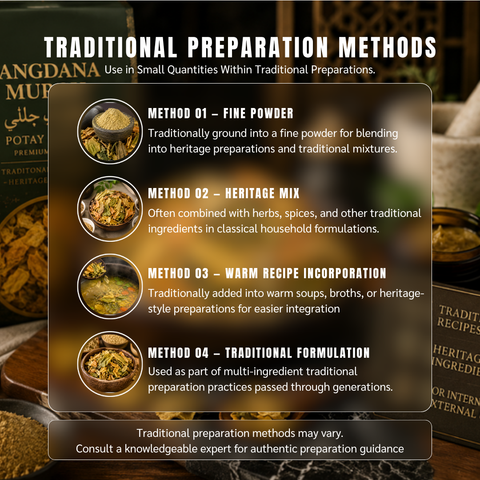
How to prepare: Traditionally, the dried membranes are lightly toasted until they become fragrant and crisp, then ground into an ultra-fine, pale-yellow powder. This powder is often blended with honey or warm water.